As the case of Amy Hamm shows, too much is left to the managerial class to decide when speech crosses some imaginary and entirely subjective line
By Lisa Bildy, Special to National Post
Published Aug 25, 2025
Fresh off his byelection win in Alberta, Conservative Leader Pierre Poilievre came out of the gates with a bold and definitive statement on social media: a professional body using its powers to regulate its members’ speech is “authoritarian censorship.”
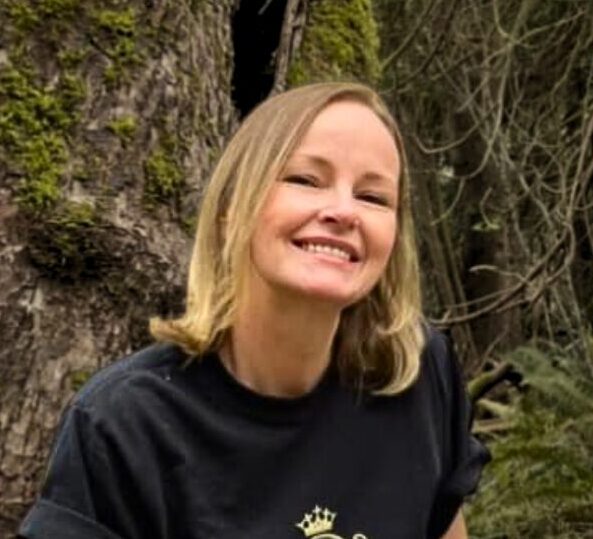
As a lawyer who focuses on defending free speech cases, I couldn’t agree more. In recent weeks, developments in two of my cases demonstrated this problem and prompted Poilievre’s statement. Nurse Amy Hamm in British Columbia received her penalty decision from the B.C. College of Nurses and Midwives’ disciplinary panel, which had found her guilty of unprofessional conduct in March for her gender-critical advocacy for the rights of women and children.
In the lengthy written decision of the panel, she was told that it was “possible to respectfully advocate for sex-based cisgender rights without making statements which denigrate and discriminate against transgender persons.” But the panel also said that statements prioritizing biology over gender “are discriminatory towards transgender people as (they exclude) them from the possibility of being women and girls.” In other words: it is not possible to advocate for sex-based rights — respectfully or not — because males self-identifying as women must always be included in the category of women, whether in prisons, rape shelters or sporting competitions.
In another case, Dr. Kulvinder Kaur Gill, a specialist physician in Ontario, received a “caution-in-person” by a committee of her regulator, the College of Physicians and Surgeons of Ontario (CPSO), for some of her online comments during the summer of 2020, when she criticized what she viewed as harmful, unethical and unscientific government-imposed responses to COVID, including lockdowns.
The CPSO had issued an edict to all Ontario physicians, first published in April 2020, that they should not express views that did not “align with information coming from public health or government.” But physicians are also subject to other “edicts,” such as their oath to “first, do no harm,” which dictates that they speak out against harmful government policies.

“Which of these ethical and moral obligations should I have set aside since 2020, and moving forward, to avoid such cautions?” Gill asked the committee delivering her caution. She received no answer. Despite slow and grudging recognition over the last five years that lockdowns were indeed a panic and control-driven blunt instrument that caused irreparable harm and had little value, the caution proceeded.
Many important discoveries and insights throughout history have come from dissident voices who were often censored or vilified for going against the perceived consensus. We are in such a time again, in which dissenting opinions are suppressed to protect preferred narratives that are often so steeped in misinformation and dogma that allowing a bit of evidence or common sense through the cracks would cause the whole edifice to fall.
It is not possible for some people to lie, deceive, go along unquestioningly or violate their own morals, values or faith. Yet failure to do so can result in proceedings like Gill and Hamm had to endure. When one’s beliefs do not comport with the views of those running our public institutions, all it can take is a complaint from a disgruntled member of the public to jump-start the process to “correct” those opinions. In the cases of both Gill and Hamm, the complainants were not patients — they were strangers on the internet who saw an opportunity to weaponize the regulatory complaints process.
But it is apparently not a disciplinary matter to express opinions, even aggressively and unprofessionally, if a professional’s political views are the “correct” ones. In Hamm’s case, she lost a job she held for 13 years at a Vancouver hospital after a group of her co-workers, most of whom express radical left-wing views, often while representing themselves as employees of the hospital, ganged up online and called for her termination.
She endured a year-long workplace investigation, including aggressive questioning by the investigator, and was ultimately fired without severance. Nothing appears to have happened to her accusers, who were also regulated professionals. This double standard is not lost on the public, who can see it plain as day.
Regulators have the power to punish professionals to such an oppressive degree that many simply sign undertakings not to speak on certain issues, make their social media accounts private or attend educational courses on “professionalism.” The alternative — defending yourself against an accusation of unprofessional conduct — can mean paying exorbitant costs for your own prosecution. In Hamm’s case, she was ordered to pay over $93,600 to the college for its legal costs.
Somehow, our society has decided that all of this is just fine. We have accepted the premise that professionals don’t have the same rights to express themselves as everyone else because of their position in society. But as regulation grows and more occupations fall under one regulator or another, a massive swath of the population, from social workers, to paramedics, engineers, accountants, daycare workers and teachers, are all under the thumb of a small group of people who think they should have the power to control what others believe and express, under the guise of “professionalism” or preventing “harm.”
And the courts defer to the “expertise” of this managerial class, rendering it nearly impossible to successfully judicially review such decisions. In Gill’s case, she tried to appeal the cautions all the way to the Supreme Court, but was denied leave.
Without the checks and balances of a judiciary that serves as the guardian of Canadians’ constitutional freedoms, the administrative state will continue unabated in its efforts to control the minds, mouths and ears of citizens subject to its powers. In this country, we’re all about expanding the limits to free speech, not about ensuring that citizens have a robust right to share their views, hear other views and debate the important issues of the day in the public square.
I reject the premise that regulators, or any government or administrative body, should get to control anyone’s speech. For one thing, the people working in these institutions are fallible and have their biases like anyone else. Many are activists who are intent on forcing their views on anyone they can. Too much is left to the managerial class to decide when speech crosses some imaginary and entirely subjective line of “‘harm,” or is “against the public interest.”
Professionals, like everyone, should be allowed to speak freely. There will be concerns about this — we won’t always like what we hear — but we should get to hear them if we choose. In rare instances where speech rises to the level of criminality, police can deal with that. We must demand that our governments remove the powers of these bodies to regulate speech and opinions — they simply cannot be trusted with the job.
Poilievre’s social media post implored that, “We must restore free speech and free thinking in a free country.” We can only have a free country if we have free speech. This needs to be fought for. As the executive director of the new Free Speech Union of Canada, it has become my personal hill to die on — and hopefully yours, too.
National Post
Lisa Bildy is a lawyer at Libertas Law and executive director of the Free Speech Union of Canada.